Yes, we went full clickbait with that title. We’re not proud of it, but you clicked, so here we are. Nothing in this series is truly shocking, unless you count a raccoon. (That’s Part 3.)
This three-part series was written by Xzavier Laprise, our co-op student in the Health Sciences department at Western University, who has been riding a Gazelle Medeo T9 to class four days a week for the last month. Here’s what he learned.
What happens when an e-bike stops being something you ride for fun and becomes part of your everyday life?
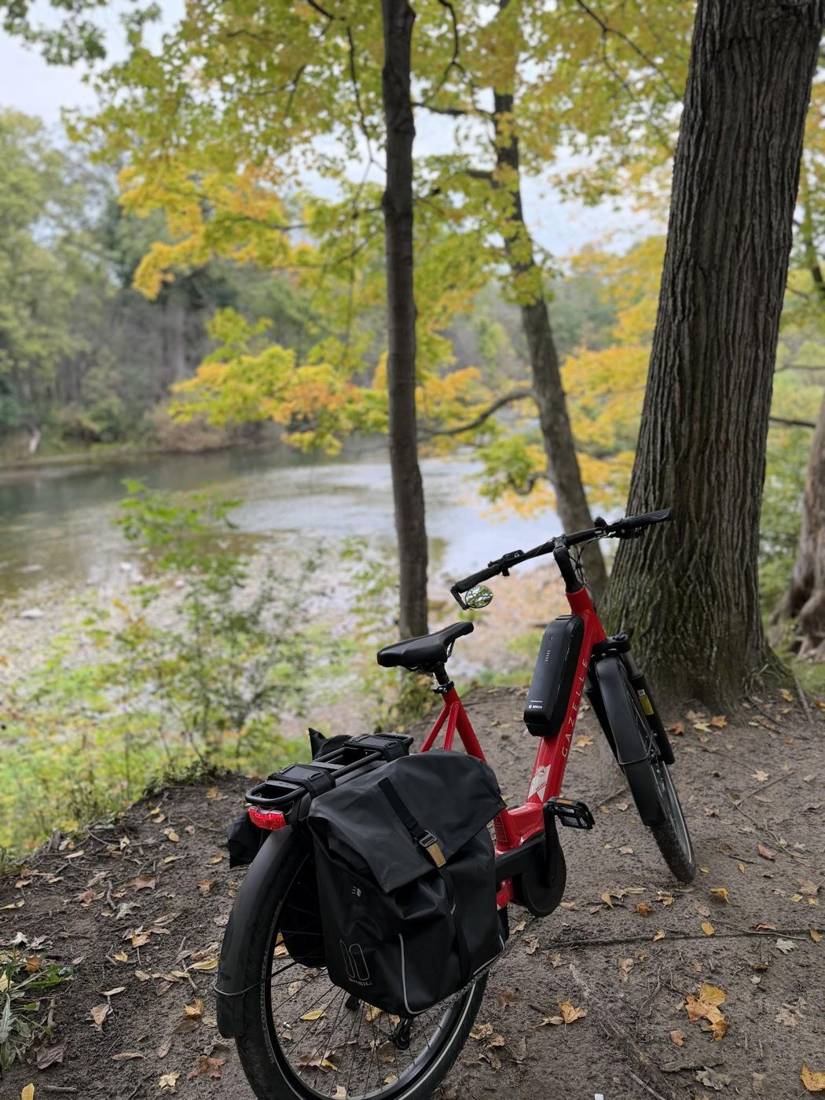
When I first picked up the Gazelle Medeo T9, I was excited to ride it, but I wasn’t entirely sure how much it would actually change my daily routine. I had ridden bikes before. I understood the basic idea of an e-bike. Pedal, get assistance, and go a little farther with a little less effort. What I didn’t expect was for the Medeo T9 to completely change the way I thought about transportation. After several weeks of using it, the bike has become part of my daily routine. I ride it to Western University four days a week, use it for groceries and errands, take it to work, ride it to intramural sports, and occasionally take the long way home simply because I feel like exploring. So, what is it actually like to use the Medeo T9 as an everyday commuter? I wanted to find out.
The First Ride
The first thing I noticed about the Medeo T9 was the colour. The bright red frame immediately stands out, but after that, I noticed how substantial the bike felt. The frame looked sturdy, and once I got on, the bike felt completely different from the bicycles I had ridden previously. The first pedal was probably the biggest surprise. There was an instant, noticeable burst of assistance as you begin moving, almost as if the bike takes away the hardest part, getting started. Instead of needing to put a lot of effort into that first acceleration, the motor gives you an immediate boost. My first thought was that my legs suddenly had superpowers. That feeling was exciting, but I quickly realized that the real value of the Medeo wasn’t going to be found in a five-minute recreational ride. It was going to be found in what happened when I started using it as transportation.
My 25-Kilometre Commute to Western
My main use for the Medeo T9 is commuting to Western University. I ride approximately 25 kilometres round trip, four days a week. One way takes me roughly 30 minutes, meaning my entire commute takes about an hour. Before acquiring the Medeo, I would usually take the bus. That trip could take anywhere from 50 minutes to an hour and a half one way. It also often required two or three transfers. The biggest problem wasn’t even necessarily the length of the journey. It was the unpredictability. There were times when a bus would leave early while I was waiting to transfer. Other times, it would arrive late. That meant a commute that was already long could suddenly become even longer and occasionally result in me being late for class. Driving was faster when traffic cooperated, but afternoon rush hour could turn a normally short trip into a 45-minute drive. The Medeo has given me something neither option consistently provided: predictability.
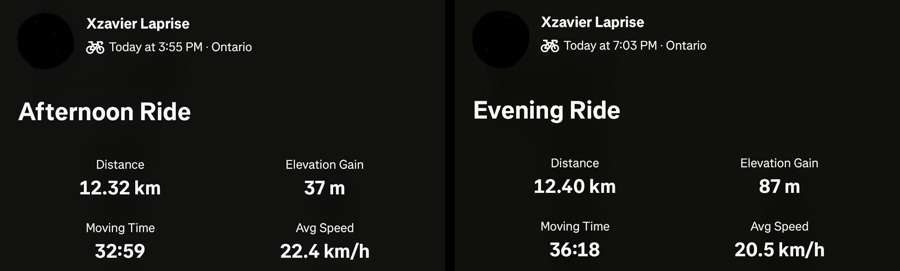
Approximately 95% of my route is along the Thames Valley Parkway. It’s smooth, relatively flat and almost completely separated from the traffic that used to determine how long my commute would take. With pedal assistance, I can maintain an average pace of 20+ km/h throughout most of the ride. And perhaps the best part? I don’t have to find a parking spot when I get to campus. I can ride directly to where I need to be.
The Difference Between an E-Bike and a Regular Bike
One of the biggest misconceptions I had before riding the Medeo was that an e-bike would simply feel like a regular bicycle with a motor attached. It doesn’t. The electric assistance changes what is possible. On a conventional bicycle, I probably wouldn’t have been willing to ride 25 kilometres to school every other day. The distance itself isn’t impossible, but the physical effort and sweating would make it impractical before class. Meaning, I don’t want to walk into a lecture looking or smelling like I just finished gym class. The Medeo changes that. If I want an easy commute, I can increase the assistance and ride at a comfortable pace. If I want to work harder, I can lower the assistance and turn the exact same route into a workout. That flexibility is what makes the bike so diverse and useful.
My Commute Can Also Be My Workout
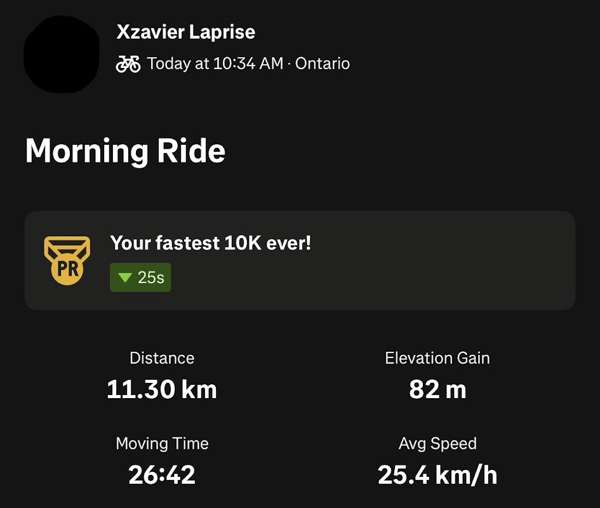
As I mentioned, one of my favourite things about the Medeo T9 is that I don’t have to choose between transportation and exercise. On the way to school, I’ll typically use higher assistance. I can pedal smoothly, enjoy the ride and arrive without being drenched in sweat. On the way home, I have a completely different approach. Since I’m not worried about showing up to class looking presentable, I’ll lower the assistance, increase the gears and intentionally raise my heart rate for a good cardiovascular workout. Suddenly, my commute home becomes a 30-minute cardio session. That’s something I didn’t fully appreciate before using an e-bike. The motor isn’t taking exercise away from you. It gives you control over how much exercise you want at any given moment.
Battery Life That Fits My Routine
The battery has also been more than sufficient for my daily riding. I typically charge the bike every night or every other night, and I get approximately 60 kilometres of riding before needing to recharge. Even with my 25-kilometre round trip to Western, I have never come close to completely draining the battery. In fact, I rarely worry about the battery percentage at all. After a couple of trips, I’ll simply plug it in overnight and start the next morning with a full charge. However, if the battery ever did run out, the Medeo is still a quality bicycle without electric assistance. I wouldn’t suddenly be stranded because I had forgotten to charge it. I could still pedal home. That peace of mind makes a difference when the bike is being used as meaningful transportation rather than just going for a cruise.
Read the whole series by Xzavier Laprise:
Part 1: The commute to Western (you are here)
Part 2: Turbo hills, rain and groceries
Part 3: Exploring London (and a raccoon)