This post was written by Jenna Hwang, a co-op student in the Health Sciences department at Western University, during her placement with London Bicycle Café.
Whether you’re a casual rider or a seasoned cyclist, incorporating regular stretching into your routine is essential to stay flexible, prevent injuries, and enhance your performance on the bike. Cycling places significant strain on specific muscles, particularly in the lower body, so keeping these muscles flexible will allow you to ride longer, recover faster, and perform better.
This guide provides a comprehensive stretching routine tailored to help cyclists get the most out of their rides while staying injury-free. And for those worried about reduced ROM or mobility issues, we will touch on the benefit of low-step models like the Tern and Gazelle T9 that provide a friendly entry point and can actually improve your range of motion (ROM) and mobility over time.
Pre-Ride Dynamic Stretches: Get Your Body Moving!
Before hopping on your bike, it’s crucial to warm up with dynamic stretches. These exercises increase muscle temperature, boost blood flow, activate key muscles, and prepare your body for the ride ahead.
Try these dynamic stretches before each ride:
- Leg Swings (forward/back and side-to-side): Loosen up your hips and leg muscles.
- Walking Lunges with Torso Rotation: A full-body warm-up that activates the lower body and core.
- Arm Circles: Prepare your shoulders for gripping the handlebars.
- Hip Rotations: Open up your hip joints to improve mobility on the bike.
- Gentle Spinal Twists: Loosen up your spine and back muscles for a more comfortable ride.
These dynamic stretches will ensure your muscles are ready to work and help reduce stiffness during your ride.
Post-Ride Static Stretches: Relax and Recover
After your ride, it’s time to cool down and stretch out the muscles you’ve worked hard. Static stretches in your post-ride routine help reduce muscle tension, improve flexibility, and promote recovery.
Lower Body Stretches
Cycling heavily relies on your lower body, so it’s essential to give these muscles extra attention post-ride.
- Standing Calf Stretch: Lean into a wall, pressing one heel into the ground to stretch your calf.
- Quadriceps Stretch: Stand tall, bend one knee, and gently pull your heel towards your glutes.
- Hamstring Stretch: Sit on the ground, extend one leg forward, and reach for your toes.
- Hip Flexor Stretch: Kneel on one knee and push your hips forward to release tight hip flexors.
Upper Body Stretches

Don’t forget about your upper body! Cycling can tighten your shoulders, neck, and back.
- Shoulder and Chest Stretch: Clasp your hands behind your back, straighten your arms, and lift your chest.
- Neck and Upper Back Stretch: Tilt your head to each side, bringing your ear toward your shoulder to relieve tension.
Special Mention: Accessible Cycling with Low-Step aka Step-Through Frames
If mobility is a concern, especially for those with reduced flexibility or range of motion, bikes with low-step frames like the Gazelle Medeo T9 Low-Step or Tern models offer a fantastic solution. These bikes are designed for easy entry, enabling you to get on and off effortlessly without needing to lift your leg high. This frame style supports those regaining mobility, helping to improve flexibility and ROM as they enjoy the physical and mental benefits of cycling.
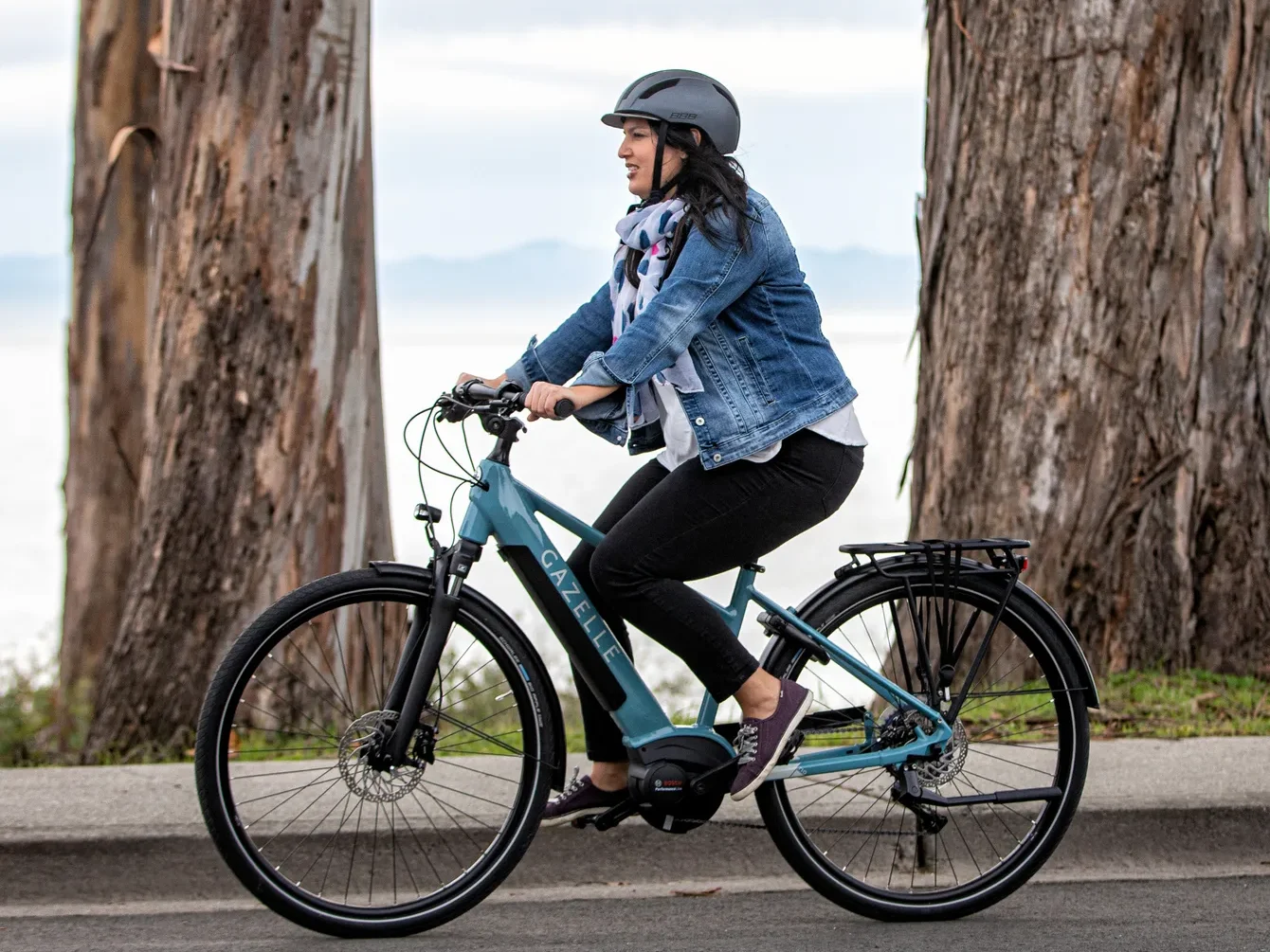
The Gazelle Medeo T9 Low-Step, available here, is an excellent entry-level option that combines comfort and accessibility with the added assistance of pedal assist. E-bikes like the T9 provide moderate aerobic exercise, proven to deliver cardiovascular and mobility benefits, making them ideal for those returning to cycling after a break or for those who thought they could no longer ride.
Focus on These Key Areas for Cycling Flexibility
When stretching, cyclists should prioritize the following areas:
- Hip flexors (tight hips can limit power and range of motion)
- Quadriceps (the primary workhorses in cycling)
- Hamstrings (crucial for pedaling efficiency)
- Lower back (supports posture on the bike)
- Calves (generate power with each pedal stroke)
- Shoulders and neck (can become tight from riding position)
How Often Should You Stretch?

Consistency is key! Make post-ride stretching part of your routine while your muscles are still warm. Here’s a general guideline:
- Stretch after every ride when muscles are warm.
- Include 2-3 dedicated stretching sessions each week.
- Hold each stretch for 20-30 seconds and repeat 2-4 times for the best results.
Pro Tips for Better Stretching
- Warm up first: Never stretch cold muscles. Use dynamic stretches pre-ride to warm up.
- Mild discomfort, not pain: Stretch to a point of tension, not pain.
- Breathe deeply: Focus on deep, regular breathing to help muscles relax.
- Foam roll: Release muscle knots and improve flexibility.
- Try yoga: Incorporate yoga into your routine for flexibility, strength, and balance, all of which benefit your cycling performance.
By making stretching a regular part of your routine, you’ll improve flexibility, reduce injury risk, and perform better on your bike. Flexibility improvements take time, but if you’re patient and consistent, your body (and your rides) will thank you.
Ready to stretch? Let’s get to it and ride stronger than ever!
Additional Resources
15 Minute Stretching Routine for Cyclists (Follow Along)
Dynamic Cyclist created this routine for cyclists but it also works as an excellent full-body stretching routine for anyone. It helps open the hips, loosen the upper body, and ease tension in the quads and hamstrings. They recommend using this stretching and mobility session as a post-workout or post-ride cool-down to lengthen muscles and release tightness.